
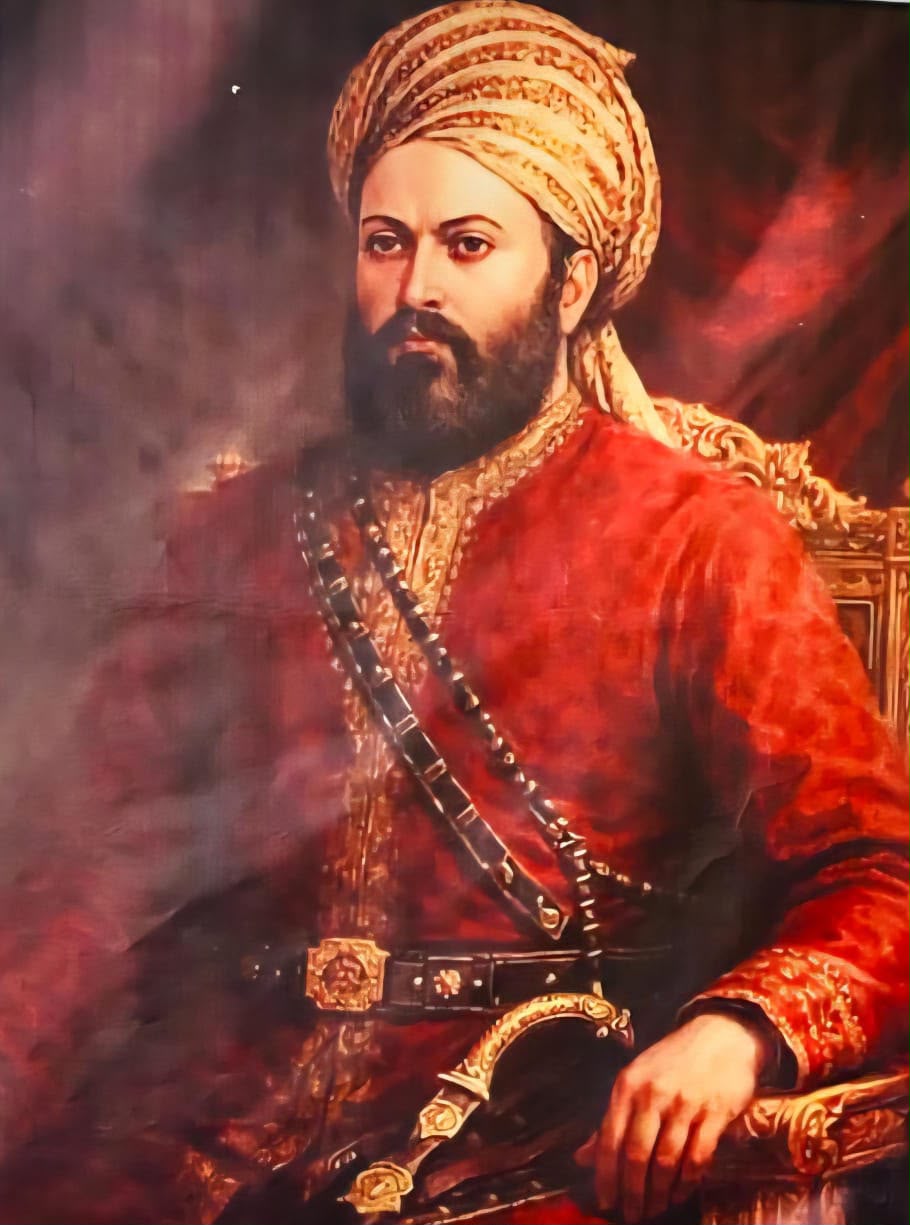
Overview
Naeb Aminullah Khan Logari lived during the final period of the Sadozai dynasty and the rise of the Barakzais, from the closing years of the reign of Shah Zaman, son of Timur Shah, until the end of the rule of Amir Dost Mohammad Khan. For nearly sixty years, he enjoyed the respect and esteem of Afghan kings, emirs, ministers, tribal chiefs, and military leaders.
Throughout the various crises and turbulent political developments of the nineteenth century - including changes of rulers, the rise and fall of individuals and families, the dismissal and appointment of ministers, foreign invasions, and major social and political transformations - he preserved his own identity and national standing as an Afghan who was conscious of the welfare and misfortunes of his country.
The late historian Abdul Hai Habibi Kazhad states that Naeb Aminullah Khan was from Baraki in Logar and was the son of Mirzai Khan Logari. He was born in 1783 in Baraki Rajan, Logar. His mother was the daughter of Kamal Khan of the Kharm Khail branch of the Wardak tribe. He lived until 1858, approximately four or five years before the death of Amir Dost Mohammad Khan, and therefore lived to the age of seventy-seven.
According to Kazhad, Naeb Aminullah Khan's father served as governor of Kashmir during the reign of Timur Shah. He died in Kashmir, and his body was brought to Kabul. The government subsequently paid his salary and allowance to his son, Naeb Aminullah Khan.
Among the historical documents and correspondence that had been purchased from the heirs of Naeb Aminullah Khan for the Kabul Museum and preserved there - until April 1992, when the National Museum was looted by armed factions - there was a document dated the beginning of the sacred month of Dhu al-Qi'dah in 1214 AH. It indicates that, toward the end of the reign of the Sadozai ruler Shah Zaman, Naeb Aminullah Khan Logari was recognized as the Khan of Logar and received an annual stipend of two hundred Toman-e Tabrizi, equivalent to approximately four thousand rupees. (1)
After the fall of Shah Zaman and the accession of Shah Mahmud Sadozai, Aminullah Khan Logari continued to be held in high regard. Wazir Fateh Khan, himself a renowned patriot and statesman, naturally made great efforts to honor prominent national figures. Accordingly, the minister restored Aminullah Khan to his former position as Khan of Logar and Batkhak, and issued a decree addressed to Fatehullah Khan Amin al-Mulk, granting Aminullah Khan Logari an annual stipend of two hundred Toman. (2)
During the first reign of Amir Dost Mohammad Khan, Logar and Batkhak once again remained under the control of Aminullah Khan Logari, and this arrangement was formally confirmed through a legal agreement. (3)
The Role of Naeb Aminullah Khan in the Kabul Uprising
The greatest fame of Naeb Aminullah Khan in the history of Afghanistan dates from the period when the British began their intervention and invasion of the country.
Fearing the growing closeness between the Russians and Amir Dost Mohammad Khan, the British began looking for excuses in 1838, particularly after the arrival of the Russian envoy Ivan Vitkevich at the court in Kabul. Following the signing of the Tripartite Treaty in the name of Shah Shuja, a large British-led army entered Kabul through Kandahar and Ghazni in August 1839 and overthrew the government of Amir Dost Mohammad Khan.
During their three years of occupation, from 1839 to 1841, the British created a deep crisis through coercion, injustice, arbitrary rule, violations of the rights, dignity, honor, and national interests of Afghans, the imposition of burdensome taxes, and the cancellation of the stipends of Ghilzai tribal chiefs who had protected the Kabul - Delhi trade route. They also imprisoned and exiled influential figures among the Barakzai, Achakzai, and other tribes.
Eventually, these measures, together with the collaboration between the foreign occupiers and the puppet ruler Shah Shuja, compelled the national leaders to rise against the foreign domination and its Afghan collaborators. Thus, on 2 November 1841, the national uprising began.
Abdullah Khan Achakzai and Aminullah Khan Logari were among the first individuals to consider an uprising against the British. They subsequently persuaded a number of other influential figures and chiefs of Kabul to join them in this purpose.
On the night of 1 November, the chiefs of Kabul once again gathered together. Nawab Muhammad Zaman Khan was chosen as the leader, or Amir, of the freedom fighters, while Aminullah Khan was appointed as his Naeb, or deputy.
On the morning of 2 November 1841, four commanders of the uprising - Abdullah Khan Achakzai, Naeb Aminullah Khan Logari, Sikandar Khan Bamizai, and Abdul Salam Khan Popalzai - who had drawn up their plan at Abdullah Khan Achakzai's house, gathered near the residence of Alexander Burnes before the people had yet come into the streets and bazaars of the city.
According to the British spy Mohan Lal, this was around seven o'clock in the morning. With the assistance of a group of fighters, they set fire to the residence of the British political representative. Alexander Burnes and his brother, Charles Burnes, were killed, and the famous Kabul uprising began.
One eyewitness was Mohan Lal, Burnes's secretary and a highly capable British spy during the Kabul uprising. He reported the events as follows:
"The sorrowful horizon of history on the second of November 1841, which was a Tuesday, appeared ugly and painful to our weary eyes, for immediately afterward a general disturbance broke out throughout the city with the speed of lightning.
"It was approximately seven in the morning when the female servants began knocking violently on the door of my bedroom and saying, 'Agha, you are asleep, but the city has been destroyed.'
"I went down into the garden of my residence and saw people transferring the belongings of their houses from our street to safer places. Shopkeepers were removing their goods from their shops, and the entire city appeared to be in turmoil.
"Mirza Khudad, secretary to Sultan Jan, came to my house. He was an old acquaintance of mine and warned me that I was in danger if I remained in my residence and that I should also move my belongings elsewhere.
"Naeb Muhammad Sharif also sent his father-in-law, Muhammad Kamal Khan, to take me, together with my valuable personal belongings, to the Persian-speaking quarter.
"But I did not accept the well-intentioned advice of my friends, because I feared that my departure from the house might increase the sense of danger that was expected. I therefore sent my servant, Abdullah Kashmiri, with a note to Burnes.
"Burnes's house was several houses to the right of mine, while the house of Captain Trevor was next to my garden on the left. I wrote down all the news I had received and waited for his advice and instructions.
"Burnes's reply was that I should remain in my house. He also informed me that he had summoned the troops and that they would soon arrive in the city.
"Half an hour later, my servant informed me that Nizam al-Dawla had told Burnes to leave his house and accompany him to the Bala Hissar. Burnes, however, sent word to Nizam al-Dawla that he did not wish to leave his house.
"Nizam al-Dawla then proceeded toward the Bala Hissar, and as he passed through the streets, shots were fired at him from the rooftops..."
Mohan Lal continued his account by describing the attack on Burnes's residence. According to his report, Abdullah Khan Achakzai, Aminullah Khan Logari, Sikandar Khan, and Abdul Salam Khan rode their horses to a garden very close to the residence of Sir Alexander Burnes.
Burnes sent a Sayyid who was in his service, together with a horseman named Hamid, to ask the leaders why they had suddenly resorted to such an open revolt. At the same time, he assured them that he would restore their former privileges and stipends.
Before the Sayyid could receive an answer, one of the leaders, Sikandar Khan, struck him with his sword and severed his head from his body. Seeing this, Burnes's mounted servant immediately rode back at full speed to inform his master.
The leaders then ordered some of their followers to climb onto the rooftops of the houses of Topchi Bashi and Agha Husain and, through the house of Mir Dad Khan, enter the garden adjoining Burnes's residence and fire upon him.
Burnes ordered the gates of his compound to be closed. By this time, approximately two hundred people had gathered around the house. Burnes appeared at a window on the second floor and appealed to the insurgents to stop fighting, promising them a large sum of money as a reward.
At that moment, a bullet struck Captain Broadfoot in the chest. Burnes and his brother Charles carried the wounded officer into the lower part of the house.
Some of Burnes's servants suggested that he wrap himself in a tent so that they could carry him out of the house on their shoulders as though he were part of the looted property. Burnes refused, saying that he could not abandon his brother and his wounded friend Broadfoot.
Then Khizr Khan, the Kotwal, whose blood was boiling with the desire to avenge himself upon Burnes, together with Haji Ali Muhammad, Hashim the hay seller, Kaka Husain, Abdul Rahim, and Muhammad Husain Khan Achakzai, reached the entrance of Burnes's residence.
They set fire to the same gate that Muhammad Mirza Khan Jawanshir had mentioned to Mohan Lal the previous night.
Smoke and flames spread into the room where Burnes and his brother were standing. They looked toward the crowd and pleaded for mercy, while Captain Broadfoot had already died.
Lieutenant Charles Burnes then went into the garden and killed approximately six people before the insurgents finally tore him to pieces.
Mohan Lal states that he watched the tragic attack on Burnes's residence from the roof of his own house. A group of men then attacked his residence. He closed the entrance and escaped through a hole in the wall of the neighboring house.
He intended to take Khan Shirin Khan, the leader of the Persian-speaking population, to help Burnes. However, in the street, Nazir Ali Muhammad saw him and stopped him.
Several people wanted to kill Mohan Lal on the spot. Shuja al-Dawla - the man who later killed Shah Shuja - had even issued a religious ruling for his execution while preparing to join Abdullah Khan Achakzai in the attack on Burnes.
However, fate intervened. Shuja al-Dawla's father, the well-known Nawab Muhammad Zaman Khan, who was a compassionate and kind man, came out of his house and rescued Mohan Lal from their hands, taking him into his residence. (4)
The historian Mir Ghulam Muhammad Ghobar, however, gives a somewhat different account. He states that Mohan Lal attempted to escape through a hole in a wall, was captured and sentenced to death, but saved himself by reciting the Islamic declaration of faith. Nawab Muhammad Zaman then handed him over to Khan Shirin Khan. (5)
Macnaghten's Attempt to Eliminate the Afghan Leaders
After the insurgents seized the British grain supplies and inflicted serious casualties on the British during the battle of Qala-i-Shirpur on 13 November, Macnaghten not only began negotiations with the leaders of the uprising but also instructed his spy, Mohan Lal, who was being held prisoner in the house of Khan Shirin Khan, to tell Khan Shirin Khan that he would pay a reward of 30,000 to 50,000 rupees for eliminating each of the principal Afghan leaders.
One of the major targets of the British artillery in Kabul was the residence of Naeb Aminullah Khan Logari.
The Naeb was staying at Qala-i-Mahmud Khan, which served as the headquarters of the Afghan resistance. With a red flag flying above the fortress, he directed the fighting against the enemy.
The British cantonment subjected Qala-i-Mahmud Khan to artillery fire, but failed to achieve the desired result.
One of Macnaghten's proposals to Wazir Akbar Khan was the capture and elimination of Naeb Aminullah Khan.
It should be noted that among the leaders of the Afghan resistance, Naeb Aminullah Khan was perhaps the only one whom the British regarded simultaneously as both a friend and an enemy.
While he was the Naeb of Shah Zaman, the king chosen by the Afghan resistance, he and his sons also maintained relations with Shah Shuja and his descendants. Yet Macnaghten, who intensely desired his death, simultaneously proposed to Sardar Akbar Khan that Aminullah Khan be eliminated while sending the Naeb himself a letter expressing gratitude for his services.
Macnaghten wrote this letter on 14 December 1841, only eight days before his own death. The letter reveals the duplicity and political maneuvering of Macnaghten toward the Afghan national leaders.
The historical letter was obtained from the descendants of Naeb Aminullah Khan and recorded in Volume II of Bala Hisar of Kabul and Historical Events by the late Allama Kazhad. Because of its historical significance, the original text is reproduced in the source. Its meaning may be rendered into English as follows:
"Compassionate and kind Naeb Aminullah Khan - may God preserve you -
"The services you and your sons have rendered to the British government and to us kind people during these days will never be forgotten.
"Praise be for the honesty and wisdom of that kind man, who has served the English people while at the same time keeping the welfare of the Muslims in mind.
"Your compassionate sons, Nasrullah and Ruhullah, have followed the same commendable path and have demonstrated loyalty and sincerity in every respect.
"These few lines have been written as a token so that, should you happen to meet with our people in the future, the good services of Your Excellency may be properly recognized.
"May God Almighty preserve you in complete health and safety for a long time.
"Written on 14 December 1841.
William H. Macnaghten." (6)
The underlying hostility of Macnaghten toward Naeb Aminullah Khan is clear. Even during the final moments of his life, when he went to the field at Bibi Mahru Cantonment to conduct negotiations with Sardar Akbar Khan, he expected that, if the negotiations proceeded favorably, he could have Aminullah Khan arrested through Akbar Khan.
At the same time, he had sent the above letter of appreciation directly to Aminullah Khan. This clearly demonstrates Macnaghten's duplicity.
Naeb Aminullah Khan as "Second Naeb"
Toward the end of the joint rule of the British and Shah Shuja, the Afghan national leaders did not recognize Shah Shuja as a legitimate independent ruler, regarding him instead as a puppet installed by the British. They had chosen Nawab Muhammad Zaman Khan as king.
For this reason, Naeb Aminullah Khan was referred to as the Second Naeb.
In the important historical agreement signed in Kabul on 1 January 1842 between the Afghan national resistance leaders and British representatives concerning the evacuation of Afghanistan, Naeb Aminullah Khan is referred to as:
"Naeb al-Thani, Rafi' Makani wa al-Jah, Naeb Aminullah Khan."
This is regarded in the source as one of the greatest documents testifying to the honor and standing of this courageous man.
Another source of pride for this national figure is that he remained one of the British Empire's principal enemies until the last British soldier left Afghanistan in 1842.
Yet an important question arises:
How could such a determined fighter and resistance leader also enjoy the confidence of Shah Shuja, the very ruler whom many Afghans regarded as a British puppet?
The following section attempts to answer this question.
How to Keep the Jewel in One Hand While Not Displeasing the Beloved in the Other?
The late Kazhad believed that Naeb Aminullah Khan sought, through his close relationship with Shah Shuja, to persuade him to form an alliance with the Barakzais - headed by Nawab Muhammad Zaman Khan - and with the other leaders of the resistance.
He then hoped that they would jointly commit themselves to completely expelling the remaining British forces, which were still stationed in Jalalabad and Kandahar.
According to Kazhad:
"If the idea of reconciling the two great groups at this critical moment had been successfully achieved through the efforts of Naeb Aminullah Khan, there was a strong possibility that the national objectives of the Afghans and the Barakzais could have been realized in the best possible manner, while Kabul, Ghazni, and Istalif might have been spared the fires of foreign destruction." (8)
However, if this really was Naeb Aminullah Khan's intention, why did he not discuss it with Nawab Muhammad Zaman Khan and obtain his approval?
Persuading Shah Shuja to ally himself with the Barakzais and then preparing him to fight against the British seemed highly unlikely.
After all, Shah Shuja had seized power from the Barakzais under the protection of British bayonets. On various occasions he had diminished their dignity and prestige in the eyes of others. This had created a deep gulf of resentment between the Barakzais and Shah Shuja.
The situation became even worse because Shah Shuja deliberately honored and favored Naeb Aminullah Khan more openly and more frequently than he honored the actual leader of the resistance, Nawab Muhammad Zaman Khan.
Naturally, such conduct was like rubbing salt into the wounds of the Barakzais and gradually weakened Nawab Muhammad Zaman Khan's trust in Aminullah Khan.
And this was precisely what Shah Shuja wanted - especially since Naeb Aminullah Khan himself did not appear displeased with his close relationship with Shah Shuja and seemed satisfied with the status and power he enjoyed at the royal court.
This satisfaction with his influence at court became even more apparent when Shah Shuja was killed on 5 April 1842 by Shuja al-Dawla, the son of Nawab Muhammad Zaman Khan. (9)
Immediately afterward, Naeb Aminullah Khan took Fateh Jang from Qala-i-Mahmud Khan Bayat to the Bala Hisar and proclaimed him king, while declaring his own son, Nasrullah Khan, his deputy.
This action by Naeb Aminullah Khan, undertaken without the consent of Nawab Muhammad Zaman Khan, naturally angered Muhammad Zaman Khan and his supporters, who refused to recognize such a king.
Naeb Aminullah Khan, seeing that Muhammad Zaman Khan's faction opposed the kingship of Fateh Jang, attempted to give Fateh Jang's kingship the appearance of having been approved by a tribal jirga.
He therefore persuaded a number of influential leaders of Kabul - including Mir Haji, Naeb Hamza Khan, Sarfaraz Khan, Amir Aslan Khan Qizilbash, Qazi Mulla Nur Muhammad Khan, Muhammad Baqir Khan, Ghulam Hasan Khan Afshar, Ghulam Rasul Khan, and Malik Zafar Khan - to sign an agreement supporting the kingship of Fateh Jang, the son of Shah Shuja.
According to this agreement, the Barakzai tribes were instructed to immediately march toward Jalalabad in support of Sardar Akbar Khan, while the Popalzais were ordered to hasten toward Kandahar to expel the British.
The Ghilzais, Qizilbash, Afshars, and inhabitants of Kabul were left free to join whichever side they preferred or remain neutral and defend the security of Kabul. (10)
This agreement, however, could not realistically be implemented, nor could it resolve the question of the competing claimants to the throne.
Its fundamental purpose, according to the author, was to remove the royal family's rivals from the capital and clear the field for the descendants of Shah Shuja and Naeb Aminullah Khan.
Nawab Muhammad Zaman Khan understood this more clearly than anyone else and therefore opposed the agreement.
Moreover, the Barakzai tribes and the forces of Nawab Muhammad Zaman Khan numbered no more than five or six thousand men. How could Nawab Muhammad Zaman Khan march with such a small force against General Pollock's fresh army of approximately twenty thousand men at Jalalabad, thereby risking certain defeat and historical disgrace for himself and his people?
The British were not merely enemies of the Barakzais and Sardar Akbar Khan. Afghanistan was not simply the country of the Barakzais and Popalzais, such that only those two tribes should rise against the enemy and, recognizing the imbalance of forces, destroy themselves and their people.
It is therefore clear, according to the author, that Naeb Aminullah Khan had political aims behind the immediate issuance of this agreement without the participation of representatives of the Barakzais.
Perhaps the assessment of Mir Muhammad Siddiq Farhang was correct when he wrote:
"Naeb Aminullah Khan was an ambitious man. He wanted the monarchy to be in the hands of a weak person who would be unable to stand against the tribal chiefs, allowing him to administer the affairs of state himself as minister. For this purpose, he favored the Sadozai princes and opposed the restoration of Amir Dost Mohammad Khan." (11)
For this reason, the agreement was met with strong opposition from the Durrani tribes, especially the Barakzais.
The Conflict with Nawab Muhammad Zaman Khan
Pledging allegiance to a king whose father had been killed by his own son was an extremely difficult matter for Nawab Muhammad Zaman Khan.
Naeb Aminullah Khan once again attempted to resolve the matter by proposing that, instead of his own son, the position of minister under Fateh Jang should be given to Nawab Muhammad Zaman Khan. However, this proposal was also rejected.
As a result, Fateh Jang issued an order requiring Nawab Muhammad Zaman Khan and all the Barakzais to leave Kabul immediately.
Mir Darwish, the brother of Mir Masjidi Khan, went to Naeb Aminullah Khan as an intermediary and requested two days so that Muhammad Zaman Khan could prepare for his departure.
During the exchange of harsh words between Mir Darwish and the Naeb, Aminullah Khan became angry and slapped Mir Darwish in the face.
This slap provoked the Barakzais and their supporters to such an extent that they immediately attacked the Naeb's house outside the Bala Hisar, looted it, and then laid siege to the Bala Hisar.
Later, a number of Popalzais, including Sardar Abdul Salam Khan, son of Sardar Muhammad Akram Khan Bamizai, left the Bala Hisar and joined the forces of Nawab Muhammad Zaman Khan.
In this way, the position of Nawab Muhammad Zaman Khan's faction became considerably stronger.
For approximately forty days, the supporters of Nawab Muhammad Zaman Khan fought against the supporters of Naeb Aminullah Khan and the forces of Fateh Jang in the streets of Kabul.
Eventually, the forces of Nawab Muhammad Zaman Khan placed the Bala Hisar under a tight siege.
At this point, Naeb Aminullah Khan sent a message to Nawab Muhammad Zaman Khan suggesting that they should stop fighting in the streets and from the rooftops and instead meet in an open field to settle the matter by force of arms.
Nawab Muhammad Zaman Khan accepted the challenge and replied that he was ready to meet the Naeb the following day at Tapa-ye Maranjan and fight him personally. (12)
According to the Akbar Nama, the forces of Muhammad Zaman Khan numbered approximately 6,000 men, while the forces of Naeb Aminullah Khan numbered approximately 18,000. (13)
The battle began, and men from both sides fell dead and wounded.
By midday, victory appeared almost certain for the forces of Nawab Muhammad Zaman Khan. Suddenly, however, Sardar Akbar Khan and Sardar Sultan Ahmad Khan arrived in Kabul from Tezin.
Sardar Akbar Khan, accompanied by three hundred horsemen, joined the side of Nawab Muhammad Zaman Khan and defeated the forces of Fateh Jang and the Naeb.
The Naeb's forces, having been defeated, fled toward the Bala Hisar. Sardar Akbar Khan and his companions pursued them to the gates of the Bala Hisar and seized their weapons and ammunition.
Fateh Jang and Naeb Aminullah Khan entered the Bala Hisar and closed the gates behind them.
The Bala Hisar was placed under siege, and efforts to undermine and breach its walls began.
Seeing the dangerous consequences of the conflict, Naeb Aminullah Khan sought the assistance of Muhammad Shah Khan Babakar Khail, a close friend of Sardar Akbar Khan, and proposed a settlement.
Through the mediation of Muhammad Shah Khan Babakar Khail, the following settlement was reached:
Fateh Jang would remain king, Sardar Akbar Khan would become his minister, and, in order to remove the hostility between the two sides and strengthen their unity, the daughter of Naeb Aminullah Khan would be married to Sardar Akbar Khan.
Thus the conflict was brought to an end, and from this time onward Sardar Akbar Khan became known as Wazir Muhammad Akbar Khan. (14)
Nawab Muhammad Zaman Khan expressed his dissatisfaction with this settlement to Sardar Akbar Khan and warned him against accepting the ministry and entering into a family relationship with Naeb Aminullah Khan.
Sardar Akbar Khan, however, replied that he had accepted the terms of peace and could not break his word.
As Hamid Kashmiri put it in verse:
"If I break the covenant I made at night at dawn,
What will my friends say - shall my enemies call me faithless?
If I lose honesty and abandon my word,
What promise shall I ever make to the people again?" (15)
This response caused relations between Nawab Muhammad Zaman Khan and Sardar Akbar Khan to deteriorate to such an extent that the two cousins eventually drew their swords against each other.
Sardar Akbar Khan emerged victorious. He nevertheless forgave Nawab Muhammad Zaman Khan and subsequently retained him as acting ruler of Kabul until the return of Amir Dost Mohammad Khan from India. (16)
Unfortunately, these settlements proved of little benefit to the country at a time when General Pollock's forces had already reached the approaches to Kabul.
Wazir Akbar Khan, who did not have a sufficiently large force with him, was unable to withstand General Pollock's 20,000-man army at Tezin. He therefore retreated toward Parwan and appointed Naeb Aminullah Khan as the supreme commander of the Afghan forces. (17)
Fateh Jang came under the protection of the British, while Nawab Muhammad Zaman Khan withdrew into seclusion.
Among all these figures, the one man who gathered around himself the fighters of Kohistan and Koh Daman - including Gazi Mir Masjidi Khan of Kohistan, Gazi Naeb Amir Khan of Koh Daman, and the father of Gazi Mir Bacha Khan, Mir Darwish Khan - and continued to resist McCaskill and his forces in the hills of Istalif until the end was Naeb Aminullah Khan.
The British regarded him as one of their most determined enemies. Therefore, according to the author, he deserves to be remembered and honored in Afghanistan as a ghazi, a devoted fighter, and an opponent of foreign domination.
The Imprisonment and Death of Naeb Aminullah Khan
During the second period of his reign, Amir Dost Mohammad Khan imprisoned this prominent national figure in the Bala Hisar of Kabul.
According to the author, this may have been because of his close friendship and cooperation with Shah Shuja and his sons, or because of his opposition to Nawab Muhammad Zaman Khan and the Barakzai supporters, or perhaps because the Amir sought to confiscate the wealth, property, and estates that were said to have fallen into Aminullah Khan's possession after the death of Shah Shuja and the evacuation of the British military cantonment at Sherpur.
Whatever the reason, Naeb Aminullah Khan was imprisoned in the Bala Hisar of Kabul.
Eventually, this proud and determined man died in prison in 1274 AH / 1858 AD, at the age of seventy-seven. (18)
An English Prisoner's Account of Naeb Aminullah Khan
Lieutenant Vincent Eyre, in a note dated 6 June 1842, writes:
"At about five in the afternoon, a great deal of firing was heard, and our guards were extremely alarmed. It was said that Fateh Jang had attacked from the Bala Hisar and had taken with him the stores of arms and the camels belonging to Muhammad Akbar Khan.
"That night we heard that the Sardar had arrested and imprisoned Aminullah Khan because of a conspiracy which he had organized in cooperation with Fateh Jang against him.
"It was said that Naeb Aminullah Khan possessed eighteen lakhs of rupees and that the Sardar wanted to obtain this money from him."
Three days later, on 9 June 1842, Eyre described the rumor that Naeb Aminullah Khan had been arrested by Sardar Akbar Khan as false.
Eyre continued his assessment of Aminullah Khan:
"Aminullah ... by his ability, courage, and horsemanship, had risen to the rank of one of the most famous men in the country.
"The last Amir, Dost Mohammad Khan, was greatly afraid of him and was so suspicious of him that he had prohibited him from coming to Kabul.
"The whole of the Logar Valley was under his control, and he could bring ten thousand warriors into the field.
"For Muhammad Akbar Khan, the friendship of such a man was extremely important for the achievement of his objectives.
"Aminullah Khan was the principal instigator of the revolt and the principal killer of Alexander Burnes. Beyond this, he would stand beside anyone from whom he believed he could derive some advantage.
"It is impossible that such an unstable man could escape the vengeance of his enemies." (19)
In another note dated 25 June, Eyre writes:
"Today Captain Mackenzie and Captain Troup came to see us. They said that at present Sardar Akbar Khan had gained the upper hand over his rivals in Kabul, that the Qizilbash had surrendered to him, and that they had handed Mohan Lal over to him."
In his note of 29 June, he further states:
"Today Fateh Jang was proclaimed Padshah by Muhammad Akbar Khan, while he himself is currently content with the title of Wazir." (20)
Conclusion
These are the views of historians, together with the accounts and observations of both Afghan and foreign eyewitnesses, concerning the Kabul Uprising of 1841 - 1842 and the individuals who played an important role in it.
Naeb Aminullah Khan Logari was a complex and influential political and military figure whose activities connected several of the major political forces of nineteenth-century Afghanistan.
He simultaneously maintained relationships with Shah Shuja and some of his supporters while playing a major role in the resistance against British power. His position among the national leaders, his influence in Logar and the areas surrounding Kabul, and his participation in the political struggles among the Barakzais, Sadozais, and other Afghan groups made him one of the significant figures of this turbulent period.
May the soul of this renowned fighter rest in peace, and may his memory be honored.
References
1. Kazhad, Historical Figures and Events of Afghanistan, 1335, pp. 110 - 111.
2. Habibi, The Early History of Afghanistan, p. 174.
3. In the Corners of Contemporary Afghan History, 1331, pp. 11 - 14, 140; Historical Figures and Events, p. 111.
4. Mohan Lal, The Life of Amir Dost Mohammad Khan, Vol. II, pp. 311 - 314.
5. Ghobar, Afghanistan on the Path of History, p. 550.
6. Kazhad, Bala Hisar of Kabul and Historical Events, Vol. II, p. 303.
7. Mohan Lal, Vol. II, pp. 345 - 346.
8. Kazhad, In the Corners of Contemporary Afghan History, p. 130.
9. Sistani, Two Military and Political Geniuses of Afghanistan in the Middle of the Nineteenth Century, Iran, 1378 Solar Hijri, p. 363.
10. Kazhad, Bala Hisar of Kabul and Historical Events, Vol. II, pp. 324 - 326.
11. Farhang, Afghanistan During the Last Five Centuries, U.S. edition, 1376, p. 192.
12. Sistani, Two Military and Political Geniuses of Afghanistan, pp. 335 - 336.
13. Hamid Kashmiri, Akbar Nama, p. 100.
14. Faiz Muhammad Katib, Siraj al-Tawarikh, Vol. I, pp. 183, 185; Bala Hisar of Kabul, Vol. II, pp. 334 - 339.
15. Akbar Nama, pp. 221 - 223.
16. Siraj al-Tawarikh, Vol. I, p. 185.
17. Mirza Ata Muhammad Shikarpuri, Taza Nawaye Ma'arik, 1331 Solar Hijri, p. 169.
18. Kazhad, In the Corners of Contemporary Afghan History, p. 114; Anis National Newspaper, issues 26 and 27, Qaws 1370 Solar Hijri.
19. In Afghanistan: The Memoirs of a Prisoner, by Lieutenant Vincent Eyre, Pashto translation by Nasim Salimi, 2007, p. 219.
20. Ibid., pp. 222 - 223; compare with Vol. II, p. 357 of Mohan Lal's history.
Edited by: Hashmatullah Naeb Khail, one of the descendants of Ghazi Naeb Aminullah Khan Logari